Skip to product information
1 of 4

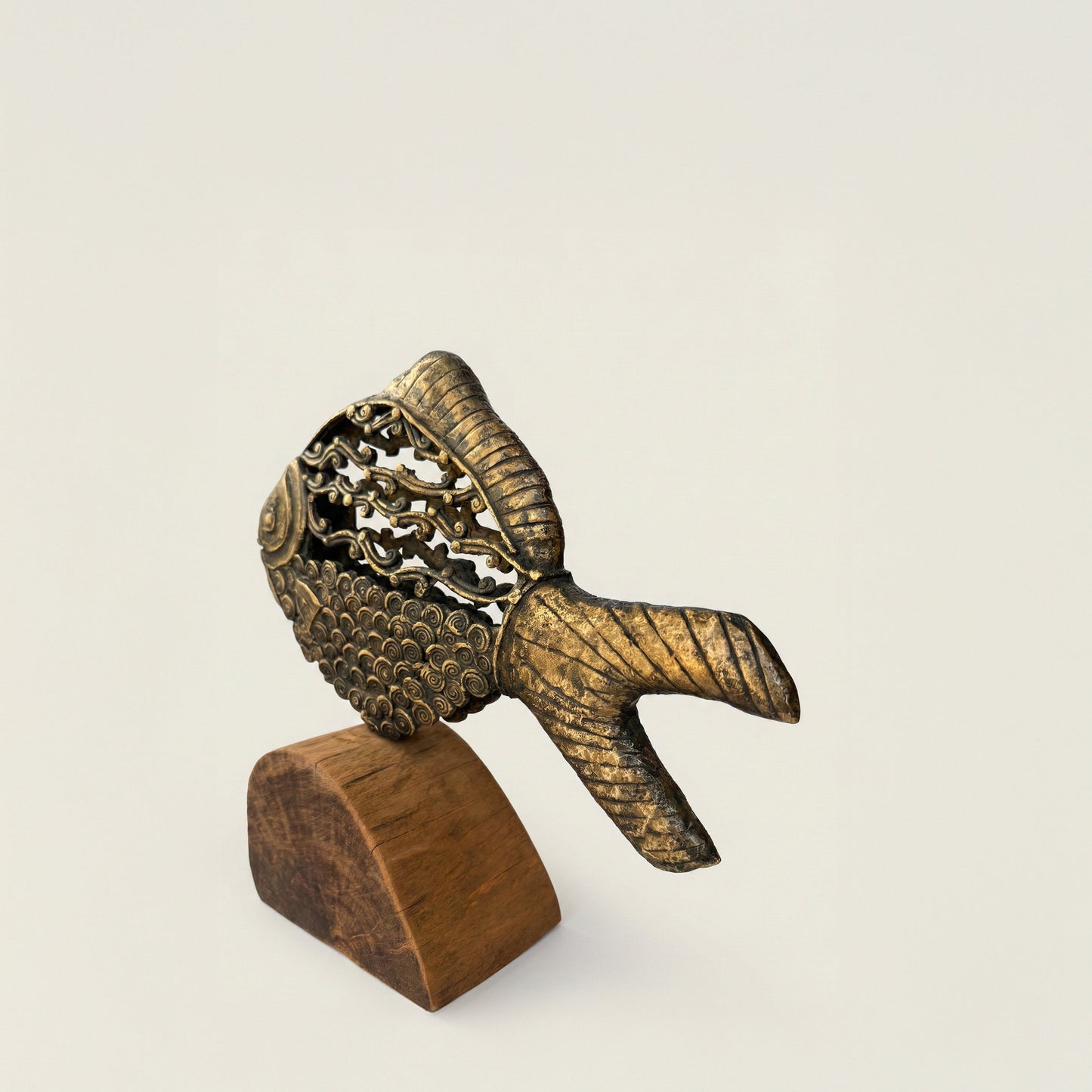
The Eternal Current — Dhokra Metal Fish Sculpture

Regular price $878.00
Shipping calculated at checkout.

A fish cast in metal using Dhokra — a lost-wax technique practiced in India for over 4,000 years. The form is abstract and sculptural, with organic perforations, spiraling surface detail, and a rhythmic texture that comes entirely from the casting process. It sits on a natural wooden base and weighs over 15 pounds, which means once you place it somewhere, it stays.

This piece was created by Rahul Dey, an artist working out of the Kolkata art circuit who reinterprets Dhokra through a contemporary lens. Each sculpture is cast once — the clay mold is broken after firing, so no two can ever be the same. The surface carries the marks of hand, fire, and time in a way that polished metalwork intentionally avoids.

15.4 lb · Dhokra cast metal on natural wooden base · Lost-wax casting · Created by Rahul Dey, Kolkata, India

Origin

India

MATERIALS

Dhokra Cast Metal (Lost-Wax Process), Natural Wood Base

STORY

Created by Rahul Dey, an artist based in the Kolkata art circuit who reinterprets Dhokra — one of India's oldest metalworking traditions — through a contemporary lens. Dhokra is a lost-wax casting process dating back over 4,000 years: a wax model is encased in clay, heated until the wax melts away, and molten metal is poured into the void. The clay mold is then broken to reveal the sculpture, meaning each piece is cast from its own unique mold and can never be replicated. The Eternal Current captures a fish in motion — fluid, rhythmic, and rooted in a tradition that predates recorded history.

Care Instructions

Dust with a soft dry cloth. The metal surface is unfinished and will develop a natural patina over time. Do not use chemical cleaners or polish — the patina is part of the piece. Keep wooden base dry.

  • Only 1 left in stock

Preserve Traditional Craftsmanship and Generational Artistry

Made using traditional Dhokra lost-wax casting — a process that uses locally sourced clay, beeswax, and metal with no industrial machinery. Each sculpture is a one-of-one piece, supporting artisan metalworkers preserving a 4,000-year-old tradition.