Skip to product information
1 of 3

The Knup — Ancestral Bamboo Canopy Lampshade

Regular price $285.00
Shipping calculated at checkout.

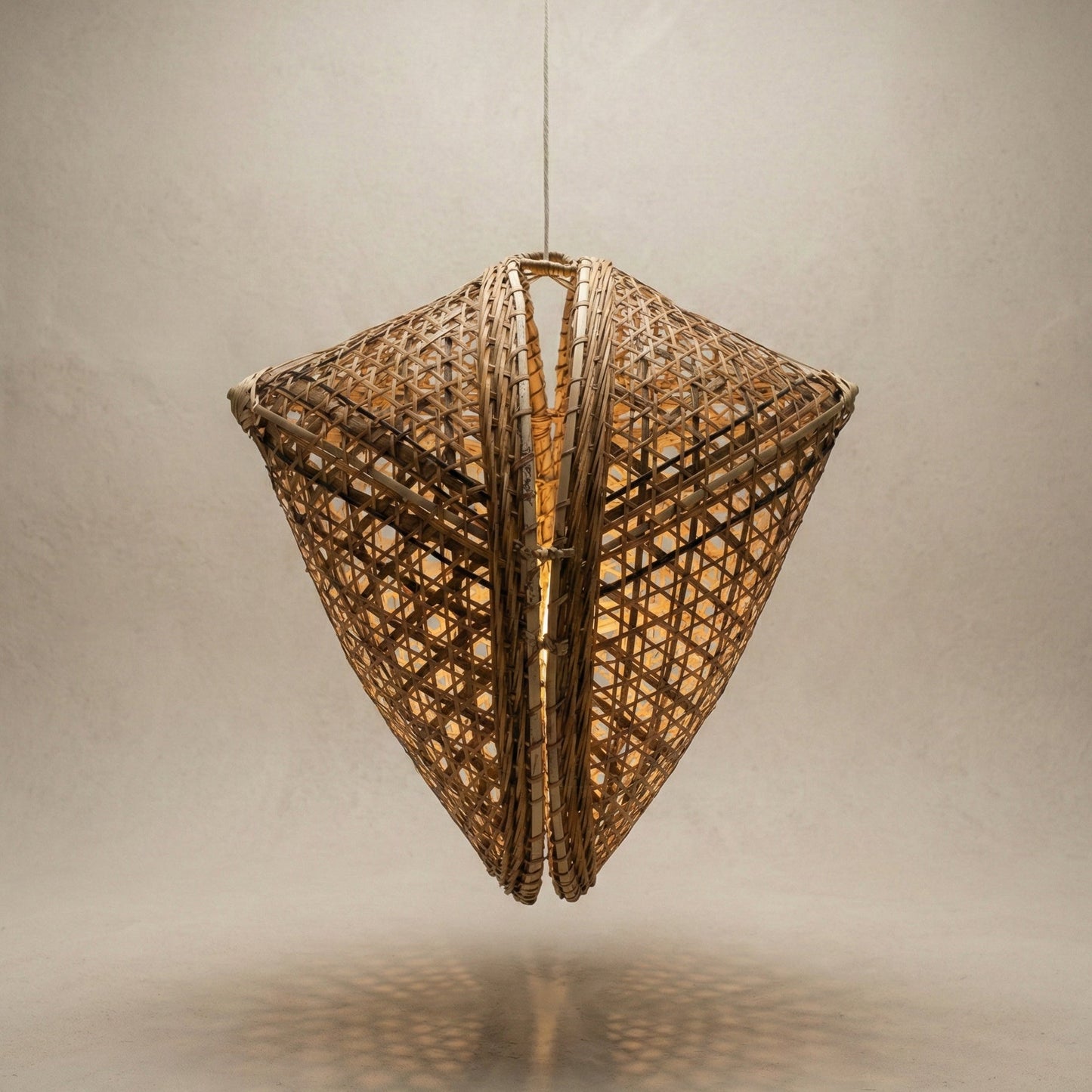
The Knup is a rain shield. For generations, Khasi farmers in Meghalaya — the wettest place on earth — have worn cone-shaped bamboo canopies on their backs to work through monsoons that would stop everyone else. This lampshade is woven in exactly the same way, by the same hands, from the same sustainably harvested bamboo. The only difference is that instead of repelling rain, it invites light.

Hand-woven in Meghalaya, India. The intricate lattice pattern is structural, not decorative — it's the same interlocking weave that kept the original Knup rigid enough to shed water while remaining light enough to wear all day. At 22 × 18 inches, it fills a room with patterned light and shadow when lit.

22 × 18 in (56 × 46 cm) · 75 g · 100% sustainably harvested bamboo · Hand-woven in Meghalaya, India · Shade only — no electrical hardware included

Dimensions

22 × 18 in (56 × 46 cm)

Origin

Handcrafted in Meghalaya, India

MATERIALS

100% Sustainable Indigenous Bamboo

STORY

The Knup is a traditional Khasi rain shield — a cone-shaped bamboo canopy worn on the back by farmers working through the monsoons of Meghalaya, the wettest inhabited place on earth. This lampshade is woven using the same technique, by the same communities, from the same sustainably harvested bamboo. The lattice pattern isn't decorative — it's structural, designed to be both rigid and light. What once shed rain now filters light. WILLAGE carries this piece because it's the kind of indigenous craft that deserves to be seen in homes far beyond the hills where it was made.

Care Instructions

Dust gently with a soft dry cloth or brush. Keep away from prolonged moisture. Indoor use only. The natural bamboo may lighten slightly over time with sun exposure.

  • Only 1 left in stock

Preserve Traditional Craftsmanship and Generational Artistry

Woven from sustainably harvested indigenous bamboo — a fast-growing, naturally renewable material that requires no irrigation, pesticides, or heavy forestry. Hand-woven by Khasi artisans in Meghalaya using no electricity or machinery.